
The price per square foot is a critical metric for homeownership and real estate investments, influencing property value, loan approvals, and market trends. Key factors include location, property condition, size, and local market dynamics. Borrowers should research comparable sales to understand pricing and set affordable borrowing limits. Accurate valuations through analysis of recent sales ensure wise investing and lending decisions in dynamic markets. Homeowners can maximize their home's price per square foot by combining market research with strategic improvements to enhance appeal and competitiveness.
Understanding the concept of price per square foot is paramount for both seasoned homeowners and those newly venturing into the real estate market. This metric, representing the cost of a property relative to its size, offers crucial insights into affordability and investment potential. However, navigating this landscape can be challenging due to varying local markets, property types, and construction costs. In this authoritative overview, we demystify the price per square foot, providing homeowners with a comprehensive guide to deciphering and utilizing this vital figure for informed decision-making. By the end, you’ll be equipped to assess properties with newfound clarity and confidence.
Understanding Price Per Square Foot: A Homeowner's Guide

Understanding price per square foot is a crucial aspect of homeownership, empowering borrowers to make informed decisions about their real estate investments. This metric, often expressed in dollars per square foot, provides a standardized way to compare properties, revealing their relative value in the market. For instance, a 2,000-square-foot home listed at $200 per square foot would be priced at $400,000, offering borrowers a quick and clear understanding of the property’s financial commitment.
Lenders and borrowers alike rely on price per square foot to assess a property’s feasibility and viability. It’s a critical factor in loan qualification, as lenders use it to determine the property’s loan-to-value ratio. Typically, borrowers seeking mortgages are advised to keep their price per square foot below 2-3 times the local average to ensure a manageable debt-to-income ratio, a key requirement for mortgage approval. For instance, in a market where the average price per square foot is $150, a borrower might aim to stay below $450 per square foot to maintain a healthy financial profile.
However, this metric is not without its nuances. Factors like location, property condition, and market trends can significantly influence price per square foot. Homeowners should research comparable sales in their area to gain a realistic understanding of their property’s value. Additionally, understanding local borrower requirements is essential; some lenders may have specific guidelines regarding price-to-value ratios, further emphasizing the need for comprehensive knowledge of the market and property assessment. By navigating these factors, borrowers can make strategic decisions regarding purchases, refinances, or investments, ensuring a financially sound journey in the homeownership realm.
Factors Influencing Your Property's Value Calculation
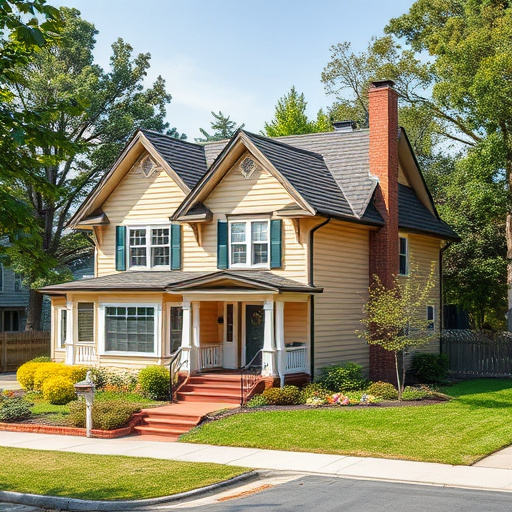
When determining the value of a property, several factors come into play, each exerting a unique influence on the final price per square foot. This metric, crucial for both homeowners and borrowers, offers a snapshot of a property’s relative worth in the current market. One of the primary considerations is location; properties in urban centers or affluent neighborhoods tend to command higher prices due to their desirability and limited availability. For instance, a study by the National Association of Realtors (NAR) revealed that homes in major metropolitan areas often sell for 1.5 times more than comparable properties in less urban settings.
Another significant factor is the property’s age and condition. Older homes may have historical charm but could also require substantial renovations, impacting their overall value. Conversely, newer constructions benefit from modern amenities and energy efficiency, which borrowers often find appealing. The price per square foot for a well-maintained, contemporary home is typically higher than that of an older, run-down property. Furthermore, the size and layout of a house play a critical role. Larger properties offer more space and potential for customization, while compact homes in high-demand areas can command premium prices per square foot.
Borrower requirements also shape this landscape. Lenders often assess a property’s value to ensure it aligns with the loan amount requested. In some cases, they may use price per square foot as a benchmark, especially when comparing similar properties in the same area. For instance, if a borrower seeks a mortgage for a 1,500 sq ft home, lenders will compare this to comparable homes in the neighborhood to ensure the requested price is market-consistent. Understanding these dynamics empowers homeowners to make informed decisions regarding property valuation and borrowing power.
Local Market Trends: How They Impact Price per Square Foot

Local market trends play a pivotal role in determining the price per square foot, which is a crucial factor for homeowners considering property transactions or refinancing. This metric, reflecting the average cost per unit area, varies widely across different regions and neighborhoods due to unique economic, demographic, and environmental factors. For instance, urban centers with high demand and limited land supply often exhibit higher price per square foot compared to suburban or rural areas. According to recent data, a home in New York City might sell at $2,000 per square foot, while an equivalent property in a mid-sized city could be around $1,400 per square foot.
Understanding local market trends is essential for both borrowers and lenders. Borrowers planning to purchase or refinance should research price trends specific to their desired location(s) to gauge affordable borrowing limits. This knowledge guides them in negotiating fair prices and securing mortgages that align with their financial capabilities. Lenders, on the other hand, must analyze local data to set competitive interest rates and loan terms while mitigating risk. For example, a lender might offer more favorable terms to borrowers in areas experiencing stable or growing price per square foot trends compared to regions facing significant declines.
In addition to location, specific micro-trends within a broader market can impact price per square foot borrower requirements. Factors such as proximity to top-rated schools, access to public transportation, and the presence of amenities like parks or shopping districts enhance a property’s desirability, driving up its value. Conversely, properties in areas prone to natural disasters or with limited infrastructure may have lower price per square foot but require enhanced consideration of associated risks. Homeowners and borrowers should stay informed about these dynamics to make well-informed decisions regarding their real estate investments and financing options.
Analyzing Comparable Sales for Accurate Pricing Insights

Determining an accurate property value is a critical aspect of homeownership, especially when considering a sale or refinance. One of the fundamental methods in achieving this is through analyzing comparable sales, which provides insights into the current market dynamics and helps establish a just price per square foot. This process involves scrutinizing recent sales transactions of similar properties within the same area to understand what buyers are paying for equivalent spaces.
For instance, let’s consider a mid-range neighborhood in a major city. If we compare a property with 1,500 square feet at $300 per square foot to three comparable homes—each with 1,600 square feet sold for $280, $320, and $290 per square foot—we gain valuable data. This analysis suggests that the initial asking price might be on the higher end of the market at the moment. Adjustments can then be made based on these comparables to arrive at a more realistic price per square foot, which is crucial for both borrowers and lenders. Borrowers aiming to secure the best terms should keep this concept in mind when discussing their desired price with lenders; understanding the average price per square foot within their area can help them negotiate from a position of knowledge.
Lenders, too, rely on comparable sales as part of their borrower requirements. They use these figures to assess the property’s value and determine loan-to-value ratios, which are essential for approving mortgages. A price per square foot analysis ensures that loans are extended based on accurate valuations, benefiting both lenders and borrowers by minimizing risks associated with overvalued properties. This process is particularly significant in today’s dynamic real estate markets where prices can fluctuate significantly due to various economic factors.
Strategies to Optimize Your Home's Price per Square Foot

Optimizing your home’s price per square foot is a strategic approach that can significantly impact its overall value. This metric, often referred to as the cost per unit area, is crucial in understanding the efficiency of your property’s pricing. A key factor for both homeowners and borrowers, it influences the affordability and desirability of a residence. The goal is not merely to achieve a high number but rather to strike a balance that appeals to buyers while ensuring a sensible investment.
One effective strategy involves analyzing comparable sales in the vicinity. Examining recent sales data of similar properties can provide insights into what the market demands. This process, known as market analysis, allows you to identify the average price per square foot in your area. For instance, if comparable homes are selling for $200 per square foot, setting a price slightly above or below this range based on your home’s unique features can be strategic. Additionally, understanding borrower requirements is essential. Lenders often assess the price-to-value ratio, sometimes using guidelines like 1-3 times the annual mortgage payment as a benchmark for affordability. Tailoring your asking price to these criteria can expedite the lending process.
Another valuable tactic is enhancing the value of your property through improvements that increase both its size and appeal. This could include adding square footage through careful architectural design or finishing unused spaces to create desirable living areas. Such transformations not only contribute to a higher price per square foot but also attract buyers who appreciate well-optimized spaces. Moreover, focusing on high-return upgrades like kitchen remodels or bathroom renovations can enhance the overall desirability of your home, ensuring that any increase in price per square foot is justified by the improvements.
By combining market research, an understanding of borrower considerations, and strategic property enhancements, homeowners can effectively optimize their home’s price per square foot. This approach not only maximizes resale value but also ensures a competitive edge in today’s dynamic real estate market.